
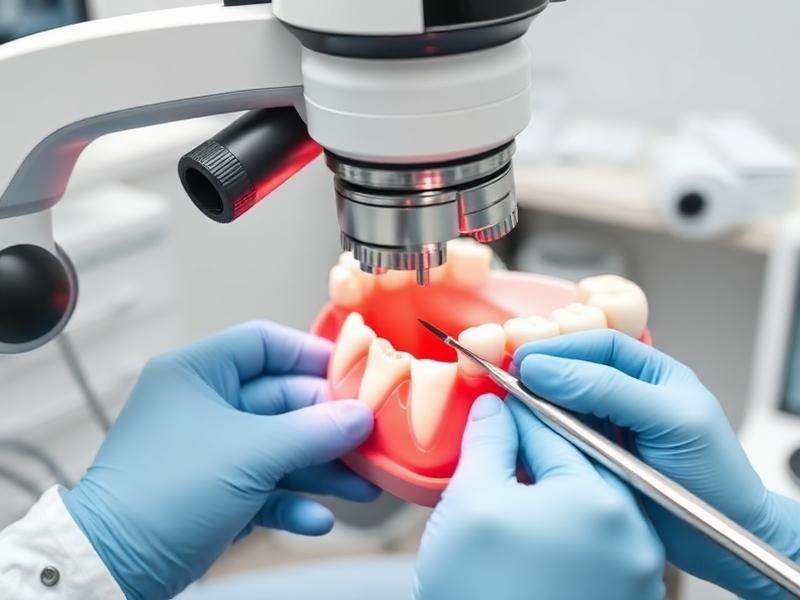
A root canal is what saves a tooth that would otherwise have to come out. When decay or a crack reaches the nerve inside the tooth, the nerve becomes infected — that is the deep, throbbing ache that keeps you awake and does not settle with painkillers. Root canal treatment removes the infected tissue from inside the tooth, disinfects the space, and seals it, so the outer tooth stays in your mouth and keeps doing its job.
The single most common thing patients tell us afterwards is that they wish they had come sooner. The reputation root canals have for being painful comes from an era of poor anaesthesia and hand instruments. Done properly, the procedure relieves pain — it does not cause it.
Signs you may need a root canal
- A deep, spontaneous ache that wakes you at night or comes on without being triggered
- Lingering sensitivity to hot or cold that lasts more than a few seconds after the drink is gone
- Pain when biting down on one particular tooth
- A tooth that has darkened compared with its neighbours
- A swelling, gum boil, or bad taste tracking from one spot
- A large old filling or a cracked tooth that has recently started hurting
What happens during treatment
We start with an X-ray to see the root shape and how far the infection has spread. You are then fully numbed — we do not begin until the tooth is genuinely silent to testing, not just until the anaesthetic has been given.
The tooth is isolated, the infected nerve tissue is removed, and the canals are shaped and disinfected with rotary instruments. The canals are then filled and sealed. Because a root-treated back tooth becomes more brittle, most molars need a crown afterwards to stop them fracturing — we will tell you at the start whether yours does, so the crown cost is never a surprise later.
Aftercare
- Mild tenderness for two to three days is normal; ordinary painkillers handle it
- Avoid chewing hard food on that side until the permanent filling or crown is placed
- Complete the crown if we have advised one — an unrestored root-treated molar often fractures within a year
- Come back immediately if swelling increases rather than settles