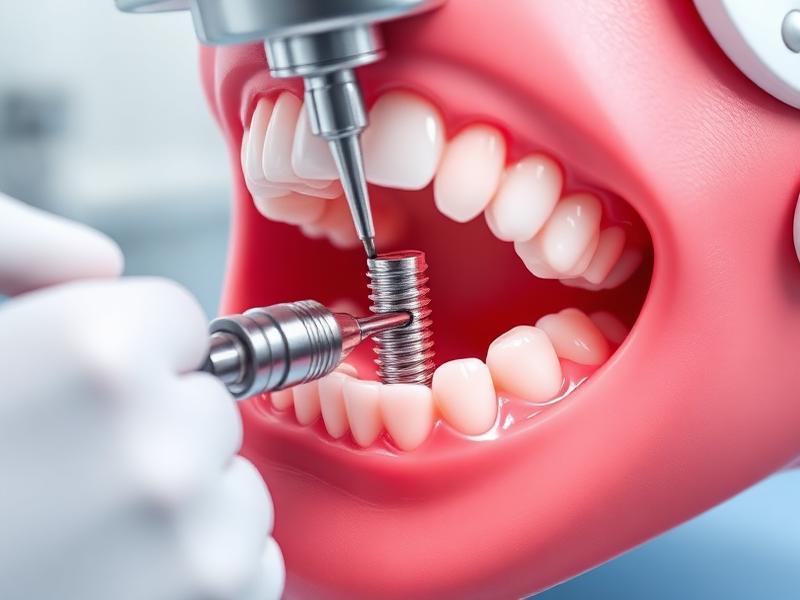
An implant replaces the root of a missing tooth, not just the visible part. A titanium post is placed into the jawbone, the bone fuses to it over a few months, and a crown is fixed on top. Once it has healed you brush it, chew on it and forget about it.
The reason implants are worth the cost is what happens without one. When a tooth is lost, the bone that used to support it starts to shrink, the teeth either side drift into the gap, and the opposing tooth over-erupts. An implant is the only replacement that loads the bone and stops that process.
What implants can replace
- A single missing tooth, without cutting down the healthy teeth on either side
- Several missing teeth, using an implant-supported bridge
- A full arch, using an implant-retained denture that clips firmly into place
- A failing tooth that is about to be extracted — sometimes placed the same day
The stages
Assessment and X-rays first: we measure the bone height and width at the site and check the gum condition. Not every mouth is ready for an implant on day one — heavy smokers, uncontrolled diabetics, and sites with severe bone loss need to be handled differently, and we will say so rather than proceed and hope.
Placement itself is done under local anaesthetic and is usually more comfortable than an extraction. Healing takes three to six months while the bone integrates with the implant. A temporary tooth can be worn in the meantime if the gap shows. Finally the permanent crown is made and fitted.
Looking after an implant
- Brush and floss it exactly like a natural tooth — implants do not decay, but the gum around them can become infected
- Professional cleaning twice a year; peri-implantitis is the main reason implants are lost
- Stop smoking if you can — it is the single biggest risk factor for early implant failure
- Wear a night guard if you grind your teeth